Own Your Masters: The Philly Label Founders Rewriting the Rules of the Music Game
There's a certain mythology that still clings to the music industry — the A&R rep sliding into a dingy venue, the contract on the table the next morning, the artist whisked away to some big-budget studio in New York or LA. For decades, that was the dream. In Philadelphia, a growing crop of label founders is calling it a nightmare in disguise.
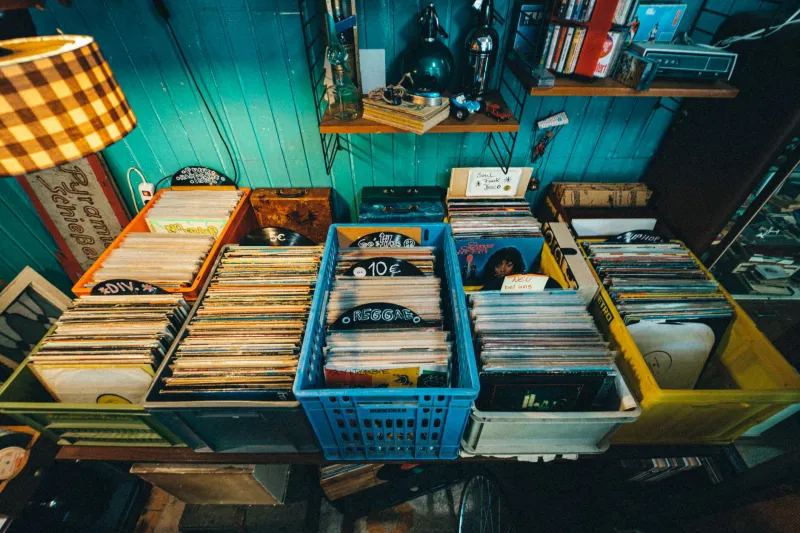
Across the city, from Germantown basements to Fishtown co-working spaces, a quiet revolution is unfolding. Independent imprints built by Philly natives are bypassing the traditional gatekeeping infrastructure entirely, signing local talent, pressing their own vinyl, distributing through direct-to-fan platforms, and keeping creative control firmly in-house. The result isn't just a business model shift — it's a full-on philosophical reckoning with what it means to make it in music.
Why Philly Is Fertile Ground
Philadelphia has always been a music city that the mainstream narrative underestimates. The soul lineage runs deep — from Kenny Gamble and Leon Huff's Philadelphia International Records to Questlove and Black Thought building hip-hop royalty through The Roots. But for every artist who broke through, hundreds more got swallowed up by deals that stripped them of publishing rights, creative say, and ultimately, their earnings.
That history isn't lost on today's independent operators. They grew up watching it happen. And with the cost of recording gear dropping dramatically and streaming platforms democratizing distribution, the barriers to running a legitimate label have never been lower.
"The infrastructure is finally in our hands," says Marcus Webb, founder of North Philly-based imprint Ironbound Sound. "We don't need a major to validate us anymore. We can build the whole thing ourselves and actually keep the money."
Ironbound Sound launched in 2020 — yes, during the pandemic — initially as a way for Webb to release his own production work. Within a year, he was signing artists from the city's emerging rap and neo-soul underground. Today, the label has seven acts on its roster, a dedicated Bandcamp page with a loyal subscriber base, and a monthly event series at a venue in Kensington that doubles as both a showcase and a community gathering.
The Labels Doing It Different
Ironbound Sound isn't alone. Across the city, a handful of imprints are each carving their own lane.
Softer Terrain Records, founded by multi-instrumentalist and producer Deja Okafor out of West Philly, specializes in what she calls "ambient R&B with a street conscience" — music that's too experimental for traditional radio but has found a fierce following online and in intimate live settings. Softer Terrain operates on a revenue-share model, meaning artists keep the majority of what their music earns. "The old model was built on debt," Okafor explains. "Labels would advance you money and then spend years clawing it back. We flipped that. If the music earns, the artist earns. It's not complicated."
Over in South Philly, Broad & Bold Records is doing something different again. Founded by childhood friends and former touring musicians Tito Reyes and Simone Grant, the label focuses exclusively on Latin alternative and Afro-Caribbean fusion — genres that Philly's growing Latino and Caribbean communities have long championed but rarely seen reflected in the city's mainstream music coverage. Their flagship artist, a young singer-songwriter who goes by Canela, has racked up millions of streams without a single major label conversation. "We didn't need them," Grant says flatly. "Our community is our label."
And then there's Gravel & Gold, a scrappy punk and indie rock imprint operating out of a converted row house in Fishtown. Founder Alex Drummond started it as a zine before pivoting to releasing music by local bands who were tired of playing for free in the hopes of "exposure." Gravel & Gold pays every artist it works with upfront for recording costs, retains no ownership of masters, and takes only a small percentage of live revenue. It's almost aggressively anti-corporate. "We're not trying to build the next Atlantic Records," Drummond says with a laugh. "We're trying to make sure bands in this city can afford to keep making music."
The Economics of Independence
None of this is without its challenges. Running an independent label on a shoestring budget means wearing every hat — A&R, marketing, accounting, booking, PR. Burnout is real. Margins are thin. And without the promotional muscle of a major, breaking through the noise on streaming platforms is an uphill climb.
But the calculus is changing. Direct-to-fan platforms like Bandcamp allow labels to build subscription revenue. Social media, used strategically, can drive discovery without expensive ad spends. And live events — the lifeblood of the Philly scene — remain an unbeatable way to convert casual listeners into committed fans.
More importantly, the artists themselves are increasingly choosing independence over the promise of a major deal. A generation raised on the horror stories of musicians who signed their lives away and ended up broke is far more financially literate than its predecessors. They're asking about publishing splits on day one. They want to own their masters. They're reading contracts.
"Artists coming up now know what 360 deals are," Webb says. "They know what recoupment means. That knowledge is power, and it's changing what they're willing to accept."
Culture, Not Just Commerce
What's striking about Philly's independent label scene is how explicitly it frames itself in cultural terms, not just economic ones. These aren't just businesses — they're community projects. Ironbound Sound's monthly events have become a legitimate social hub for North Philly's creative community. Softer Terrain hosts free recording workshops for young women and non-binary producers. Broad & Bold has partnered with local muralists and visual artists to create physical releases that double as art objects.
There's a sense, across all of these operations, that the music is inseparable from the neighborhood it comes from. That Philly's sound — plural, layered, impossible to pin down — belongs to Philly first.
"I'm not trying to make music that sounds like it could've come from anywhere," Okafor says. "I want people to hear it and know exactly where it's from."
The Bigger Picture
The rise of these independent imprints is part of a broader national conversation about ownership, equity, and who gets to profit from Black and Brown creativity in America. Philadelphia, with its deep musical heritage and its complicated relationship with gentrification and economic inequality, is a particularly charged setting for that conversation.
What Ironbound Sound, Softer Terrain, Broad & Bold, and Gravel & Gold are building isn't just an alternative to the major label system. It's an argument — loud, practical, and increasingly hard to ignore — that the music industry doesn't have to work the way it always has.
The gatekeepers are losing their grip. And in Philly, the people picking up the slack aren't waiting for permission.