Frequencies of the Future: Inside the Philly Studios Wiring Gen-Z's Sonic World
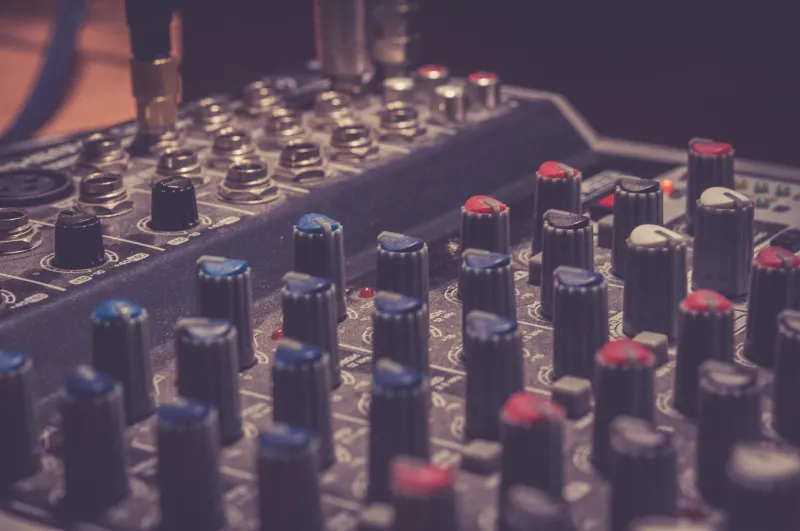
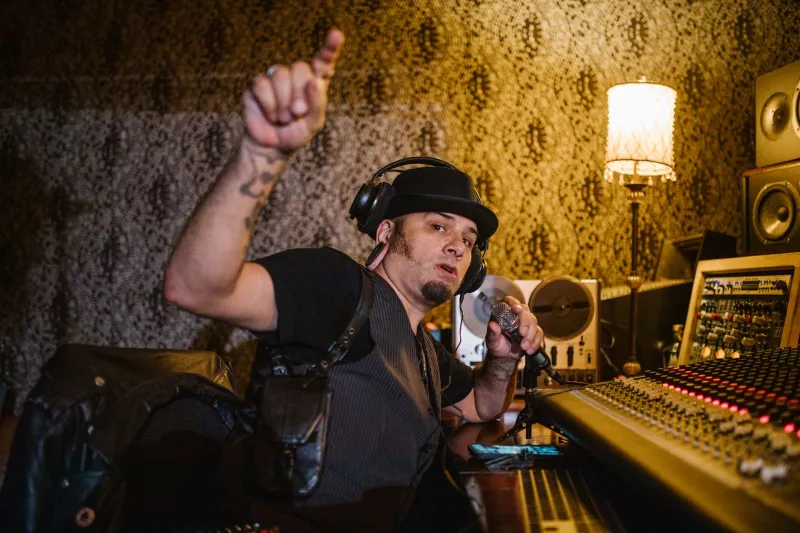
There's a hallway in West Philly that smells like soldering iron and takeout. Behind a door marked only with a strip of gaffer tape, two people are arguing — politely, passionately — about whether a hi-hat should sit at 12kHz or 14kHz in a mix that, in three weeks, will be streaming in 40 countries. Nobody in this hallway is older than 28.
This is the new Philadelphia sound. Not a genre. Not a movement with a manifesto. Just a generation of deeply technical, deeply creative people who grew up on SoundCloud and spatial audio and Dolby Atmos movie trailers, and who are now building the infrastructure to translate all of that into something the city can call its own.
Philly has always punched above its weight in music — from the lush orchestrations of Philadelphia International Records to the gritty basement rap that defined the 2000s underground. But what's happening right now feels different. It's less about artists and more about architecture. The sound itself is the statement.
More Than a Beat: The Rise of the Sonic Architect
Talk to Deja Wren, 25, who runs a compact but immaculate studio out of a converted row house in Germantown, and she'll push back immediately on the word "producer."
"I'm a sound designer," she says, adjusting the monitors on her desk without looking away from you. "There's a difference. A producer makes tracks. I'm thinking about how a listener's nervous system responds to a sound at a specific moment. That's a completely different discipline."
Wren's recent work spans a self-released R&B EP for a Temple University student, an immersive audio installation that ran for two weekends at a Fishtown gallery, and — she mentions this almost as an afterthought — sound consulting for a Gen-Z-focused podcast network based out of New York that wanted a "Philly feel" without being able to define what that meant.
"I had to define it for them," she laughs. "Which, honestly, is kind of the whole job right now."
That question — what does Philly sound like in 2025 — is one that a loose network of engineers, designers, and producers across the city are collectively, sometimes competitively, answering.
The Technical Revolution Happening in Spare Bedrooms and Storefronts
What makes this moment distinct isn't just talent. It's access. The democratization of professional-grade audio tools has meant that the gap between a bedroom setup and a commercial studio has narrowed dramatically. A $300 audio interface, a solid pair of headphones, and the right plugins can produce work that holds up against anything coming out of a major-label facility — if the person behind it knows what they're doing.
And increasingly, the people behind it in Philly absolutely do.
Marco Tillman, 27, operates out of a shared creative space near the Italian Market. His specialty is what he calls "textural layering" — building sonic environments where the listener can't quite identify every element but feels the cumulative weight of all of them.
"Gen-Z doesn't just hear music," he explains, pulling up a session file dense with hundreds of individual tracks. "They wear it. With earbuds in 18 hours a day, the relationship is intimate in a way it never was before. So every frequency decision matters more. The space between sounds matters. The room tone matters."
Tillman's approach has attracted clients ranging from local visual artists who want soundscapes for video work, to small brands looking for sonic identities — the audio equivalent of a logo — to artists who've outgrown the limitations of working with producers who think in more traditional, loop-based terms.
Podcasts, Playlists, and the Expanding Definition of Sound
It would be a mistake to frame this purely around music. Some of the most innovative sonic work happening in Philadelphia right now is attached to podcasts, short-form video, and experiential events — categories that barely registered in the city's audio economy a decade ago.
Naomi Osei, 24, splits her time between scoring short documentary films and doing post-production audio for three different podcast productions, two of which are based in Philly and one that records remotely but mixes locally by choice.
"Podcast listeners are incredibly attuned to audio quality now," she says. "They might not be able to articulate why one show feels more trustworthy or more intimate than another, but a huge part of it is the sound design. The room sound. The way voices are treated in the mix. It's subliminal, but it's real."
Osei recently completed work on an audio-first storytelling project that took Philadelphia neighborhood oral histories and transformed them into something closer to a sonic documentary — ambient street noise woven under voices, music that responded emotionally to the content rather than simply underscoring it. It premiered at a Kensington arts space and drew a crowd that skewed notably young.
"People stayed for the whole thing," she says, still sounding a little surprised. "Ninety minutes of audio. They just sat there."
A Scene Without a Center — and Why That Might Be the Point
What's notable about Philly's emerging sound design community is its deliberate decentralization. There's no single studio that functions as a hub, no one engineer whose credits serve as a credential everyone aspires to. The scene operates more like a web than a hierarchy — collaborators who move between projects, share knowledge freely, and compete in ways that feel more generative than territorial.
That ethos tracks with how Gen-Z broadly approaches creative industries: laterally, collaboratively, with a healthy skepticism toward gatekeeping. The studios in Germantown and the Italian Market and West Philly aren't trying to become the next legendary Philly institution. They're building something that fits the moment they're actually living in.
"I don't want to be the next anything," Deja Wren says, near the end of a conversation that's stretched well past the time she'd originally offered. "I want to be the first version of what I'm doing. That's the whole point."
Somewhere in that West Philly hallway, the hi-hat debate has apparently been resolved. A track plays through the door — brief, half-finished, already undeniably itself. It sounds like Philadelphia. It sounds like right now. It sounds, somehow, like whatever comes next.