Built for Connection: The Philly Venues That Are Quietly Fighting Loneliness
The Surgeon General called it an epidemic. Researchers have compared its health effects to smoking fifteen cigarettes a day. Loneliness — chronic, pervasive, socially invisible — has become one of the defining public health crises of American life. And while the policy world debates solutions at a macro level, something interesting is happening on a much smaller scale, in the bars and gathering spaces of Philadelphia.
Some venue owners and experience designers in this city are building their businesses around a different question than the one that usually drives nightlife: not "how do we get people to spend more?" but "how do we get people to actually connect?"
The answer is reshaping what going out looks like.
The Problem With the Standard Model
Most nightlife venues are, when you strip away the ambiance, optimized for consumption. The layout funnels you toward the bar. The music volume makes conversation difficult. The seating arrangements prioritize table turnover. The lighting is designed to make you look good in photos, not to encourage the kind of sustained eye contact that actual intimacy requires.
This isn't cynicism — it's economics. Bars and clubs survive on volume, and volume means throughput. But a growing number of operators in Philadelphia are arguing that this model is both socially destructive and, increasingly, bad for business.
"People are exhausted by spaces that make them feel more alone," says Maya Chen, co-owner of a gathering-focused venue in Fishtown that deliberately caps its capacity and limits its sound system volume. "They come out to feel something real. If your space doesn't deliver that, they're not coming back."
Design as Social Engineering
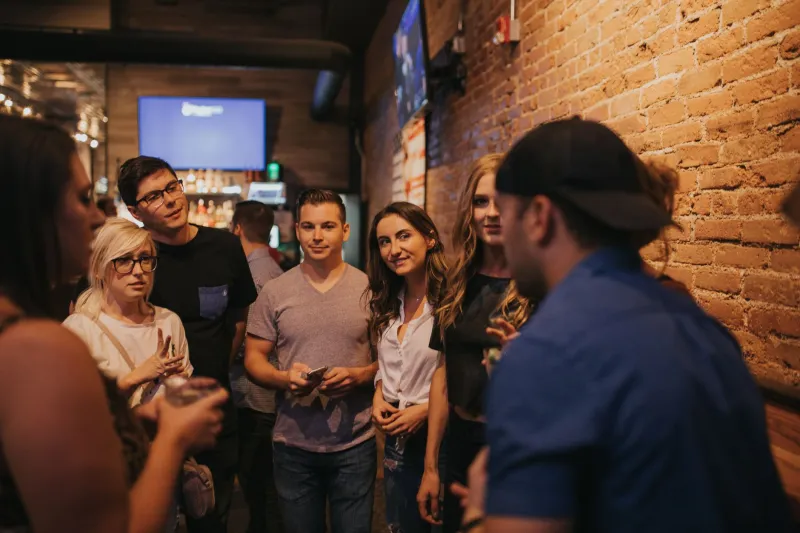
The venues leading this shift share a few physical characteristics that aren't accidental. They tend to be smaller — intimate enough that you're aware of the people around you without feeling crowded. They use circular or communal seating arrangements that make it easy for strangers to end up in conversation. Their lighting is warm and consistent, the kind that makes faces readable rather than dramatic.
Many of them have eliminated or dramatically reduced televisions, which research consistently shows redirect social attention away from the people in the room. Some have introduced programming — trivia nights, communal dinners, skill-sharing workshops — that gives strangers a shared task to organize around.
Dr. Keisha Williams, a social psychologist at Temple University who studies urban community formation, says the design choices aren't trivial. "Physical environment has a profound effect on social behavior. When you create a space where eye contact is easy, where noise levels allow real conversation, where there's a reason to talk to the person next to you — you're dramatically increasing the probability that meaningful connection happens."
The Regulars Who Become Family
Spend time at any of Philadelphia's connection-forward venues and you'll hear a version of the same story. Someone moved here from another city, didn't know anyone, started coming to this particular bar on Thursday nights, and slowly — through trivia teams and shared bar stools and conversations that stretched past last call — built something resembling a social life.
For a city that has a reputation for being guarded with outsiders (the "Philly freeze" is real, ask any transplant), these spaces function as social infrastructure. They lower the activation energy required to make friends as an adult, which is, in the experience of most people over 25, genuinely difficult.
"I moved here for a job and I didn't know a single person," says Marcus, a 31-year-old software developer who became a regular at a NoLibs bar known for its intentional community programming. "I'm not exaggerating when I say the people I met here are my closest friends in this city. I don't know what my life looks like without this place."
Stories like Marcus's are not marketing copy — they're the actual value proposition of what these venues are selling. And they travel. Word of mouth in Philadelphia's social media ecosystem is powerful, and spaces with genuine reputations for warmth and community fill up without spending heavily on advertising.
The Anti-Isolation Movement Has a Business Case
Skeptics might argue that prioritizing connection over consumption is a luxury the nightlife industry can't afford. But the evidence from Philadelphia's most successful community-oriented venues suggests the opposite.
Regulars spend more over time than one-time visitors. They bring friends. They show up even when it's raining, even when there's nothing special on the calendar, because the place itself is the draw. The lifetime value of a truly loyal regular — someone who comes in three times a week for years — dwarfs the short-term revenue of a high-volume event night.
"We don't do bottle service. We don't do VIP sections. We don't have a DJ who makes conversation impossible," explains one South Philly bar owner. "What we have is a room full of people who know each other's names. That's harder to build than a sound system, but it's also a lot harder for someone else to copy."
Philly as a Town Square
There's a deeper cultural argument embedded in all of this. The decline of genuinely public space — the corner bar, the neighborhood diner, the park where people actually lingered — has been one of the quieter tragedies of American urban life over the past few decades. The rise of delivery apps, streaming services, and remote work has accelerated a privatization of experience that leaves people physically close to each other but functionally isolated.
The venues that are pushing back against this trend are, in a sense, trying to revive something that cities used to provide automatically: a place where you could show up without a plan and be part of something. The agora. The commons. The neighborhood bar where everyone knew your name, but updated for a city where neighborhoods are in constant flux and community has to be intentionally built.
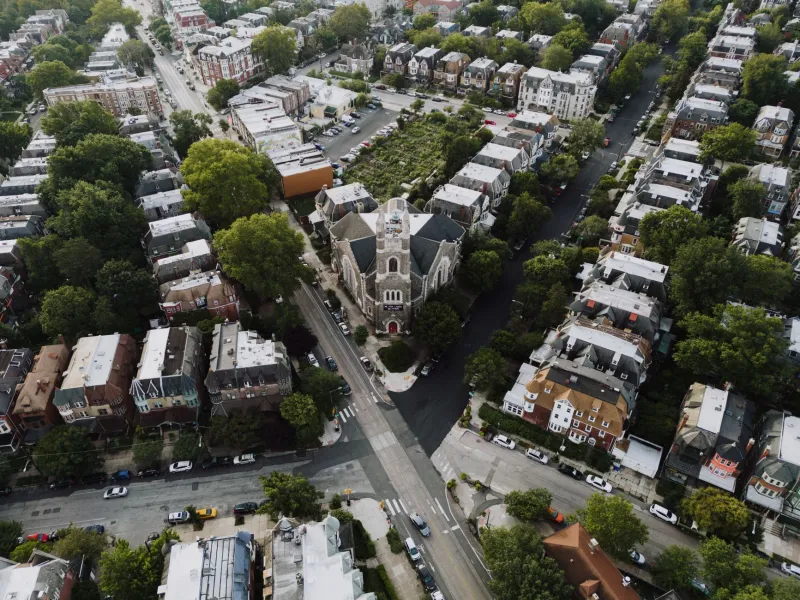
Philadelphia, with its strong neighborhood identities and its cultural pride in being a "city of neighborhoods," is a particularly fertile place for this experiment. The city has always valued the local, the personal, the unpretentious. A nightlife movement that builds on those values rather than importing a glossier, more transactional model from New York or LA feels authentically Philly in a way that matters.
What You're Really Paying For
The next time you're deciding where to spend your Friday night, it might be worth asking a slightly different question than usual. Not just "what's happening?" but "what kind of space is this, and what does it want for me?"
The venues that are doing this work in Philadelphia — the ones designed around connection rather than consumption — are betting that you want more than a good drink and a decent playlist. They're betting you want to leave feeling like you belong somewhere.
In a city that can feel, at times, like it's moving too fast for its own community to keep up, that bet looks increasingly like the right one.