Midnight Canvas: Inside the After-Hours Art Movement Turning Philly's Forgotten Spaces Into Galleries
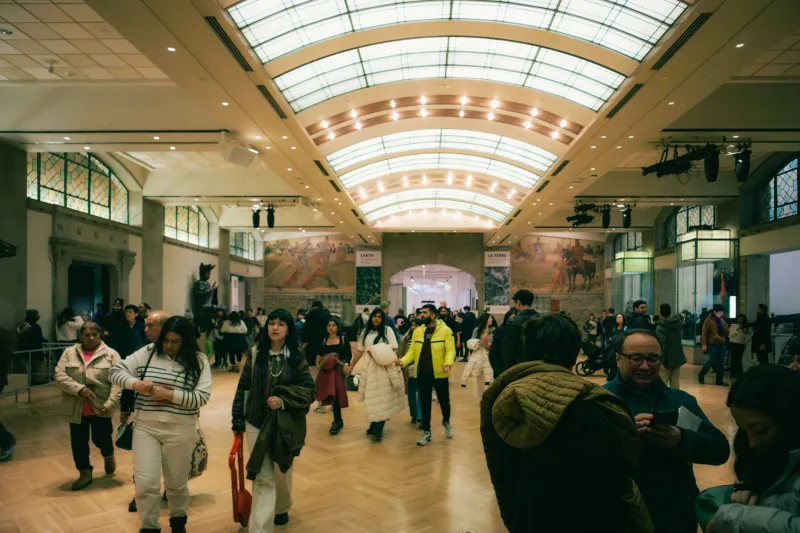
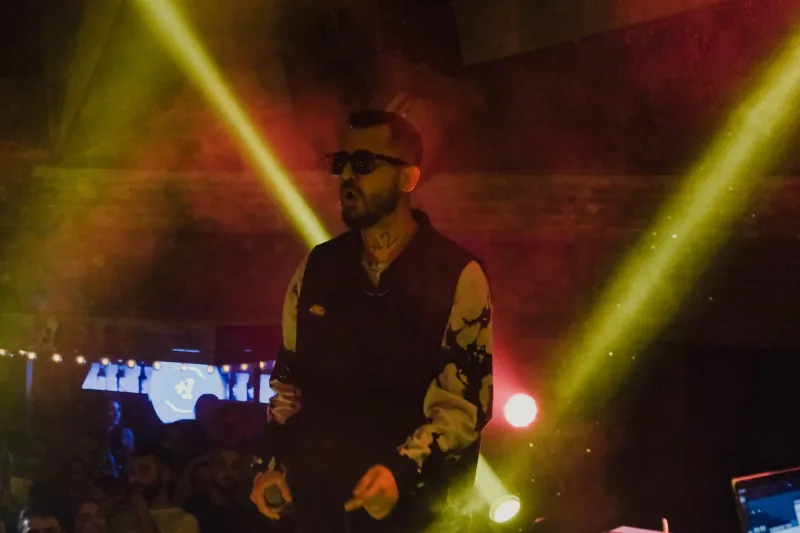
The text comes through around 10 p.m. — an address in Kensington, a loading dock door, and a simple instruction: knock three times. By 11:30, the space behind that door is packed. A photographer's large-format prints hang from industrial piping. A sculptor has arranged ceramic pieces across the concrete floor. Someone's running a turntable in the corner, and the crowd — a genuinely eclectic mix of artists, nightlife regulars, and curious strangers — moves through it all with the kind of energy you don't usually associate with looking at art.
This is Philadelphia's after-hours art scene, and it is very much alive.
The Problem With 6 p.m.
Traditional gallery culture operates on a schedule that quietly excludes a lot of people. Opening receptions cluster around early evening hours, exhibitions run Tuesday through Sunday with polite daytime hours, and the whole apparatus tends to favor people with the flexibility to show up when the work week isn't demanding their full attention.
Philly's underground art movement is, at least in part, a direct response to that limitation. The artists and organizers driving it aren't necessarily anti-institution — many of them also show work in conventional gallery settings. But they're interested in what happens when you strip away the formality and bring art into contact with a different kind of crowd.
"The nightlife audience is underrated," says Camille Vásquez, a multidisciplinary artist and one of the organizers behind a rotating late-night event series that's been running through various Philadelphia neighborhoods for the past two years. "These are people who are already out, already open, already in a mode of experiencing things. They're not walking in with their arms crossed."
The results can be genuinely surprising. Pieces that might feel quiet or cerebral in a white-cube gallery context take on new life when they're sharing space with a crowd that came to be out in the city, not to perform cultural sophistication.
Mapping the Scene
There's no single address for Philadelphia's after-hours art world — that's partly the point. Events move through spaces that aren't traditionally associated with art at all: vacant storefronts in Fishtown, back rooms of record shops in South Philly, warehouse floors in Port Richmond, rooftops in Northern Liberties.
Some of these gatherings operate through invite-only text chains or private social media groups, giving them a word-of-mouth intimacy that feels intentional. Others are more openly publicized but maintain an off-the-beaten-path quality through sheer timing and location.
Collectives like Studio Drift Philly and the Concrete Salon have been among the more visible organizers in this space, building reputations for events that blend visual art, performance, and sound in ways that feel less like a gallery opening and more like a genuine cultural happening. Attendance at their events has grown steadily, with some nights drawing upward of 200 people to spaces that weren't designed to hold anyone at all.
"We had a show in a former auto body shop in Kensington last fall," recalls Jordan Tate, a painter who's shown work through several of these collectives. "The ceiling was like 30 feet high, the walls still had old grease marks on them. We didn't try to clean it up or neutralize it. The work lived inside that history, and people responded to it in ways I didn't expect."
Democratizing the Art Experience
Beyond the aesthetic appeal of unexpected spaces, there's a genuine political dimension to what this movement is doing. Contemporary art has a well-documented access problem — not just in terms of who can afford to collect it, but in terms of who feels welcome to even look at it.
Many of Philly's after-hours events are free or pay-what-you-can, deliberately lowering the financial barrier to entry. They're often organized by artists of color, queer artists, and working-class creatives who have their own complicated relationships with the gatekeeping structures of the mainstream art world.
"I've been in rooms at fancy gallery openings where I could feel people looking at me like I didn't belong," says Vásquez. "I don't want to replicate that. I want to make something where the person who just got off a double shift at a restaurant feels as welcome as the art collector from Rittenhouse."
That ethos extends to the work being shown. These events tend to feature emerging artists who haven't yet landed representation, experimental work that wouldn't find a home in more commercially oriented galleries, and collaborative pieces that blur the line between artist and audience.
The City as Medium
What makes Philadelphia particularly fertile ground for this kind of movement is the city's physical landscape. Decades of deindustrialization left behind an enormous stock of large, inexpensive, and architecturally dramatic spaces — the exact kind of environments that make for compelling impromptu galleries. As the city continues to develop and gentrify unevenly, these spaces are both abundant and increasingly precarious.
There's an awareness among the organizers of this scene that what they're doing exists in a complicated relationship with that development pressure. Using abandoned or underutilized spaces for art is beautiful, but it can also be a leading edge of the gentrification wave that eventually prices out the communities that made those spaces interesting in the first place.
"We talk about this a lot," says Tate. "We don't want to be the reason a neighborhood changes in ways that hurt people. We're trying to be intentional about where we go and who we're in conversation with in those communities."
What Happens After the Lights Come On
Philadelphia's after-hours art scene isn't going to replace the city's established cultural institutions — and it doesn't want to. What it's doing is filling a gap, creating space for a kind of creative encounter that the formal art world isn't equipped to provide.
For the artists involved, these events serve as laboratories. Work gets tested in front of real audiences, outside the controlled conditions of a traditional exhibition. For the people who attend, they offer something that's increasingly rare in city life: genuine surprise, genuine community, and the particular thrill of feeling like you've found something that isn't on any official map.
The text threads keep humming. The addresses keep changing. And somewhere in this city, right now, someone is hanging work in a space that wasn't a gallery yesterday and might not be one tomorrow — which is exactly what makes it worth finding.