Stream Kings: How Philly's Independent Artists Are Cracking Spotify's Playlist Code Without a Label in Sight
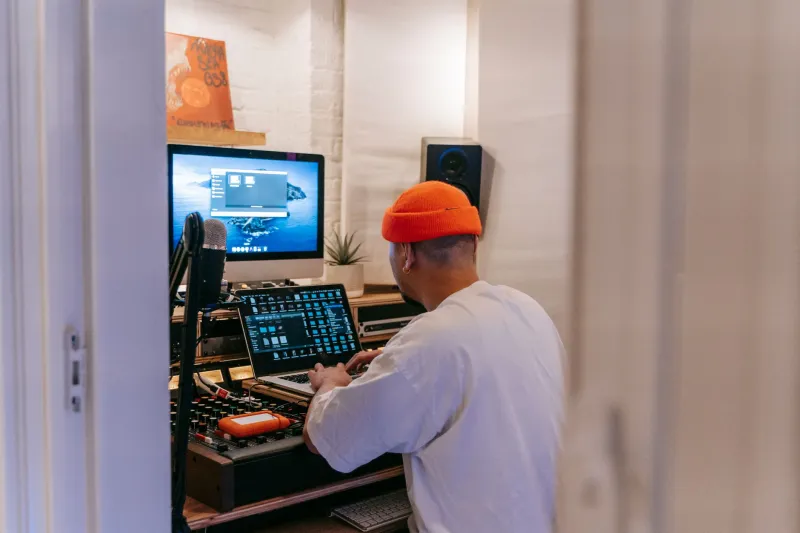
There's a bedroom in West Philly where a 23-year-old producer named Darius — who goes by Daye Waves online — runs what is, by any reasonable metric, a thriving music business. No A&R. No publicist. No label advance burning a hole in his pocket. Just a mid-range laptop, a set of monitors he bought secondhand off Facebook Marketplace, and a Spotify for Artists dashboard he checks more obsessively than most people check their texts.
Last March, one of his tracks landed on an editorial playlist called "Peaceful Piano" — a playlist with over 8 million followers. His monthly listeners jumped from roughly 4,000 to just under 60,000 in three weeks. He didn't pitch a single radio station. He didn't play a showcase. He just understood the algorithm better than most people twice his age with twice his budget.
Daye Waves is not an anomaly. He's part of a growing wave of independent Philly artists who are quietly, methodically dismantling the old gatekeeping infrastructure of the music industry — one playlist placement at a time.
The Playlist Is the New Radio
For anyone still thinking in terms of spins and airplay, the paradigm shift is jarring. Spotify's editorial playlists — curated by actual human beings employed by the company — can deliver listener counts that would make a regional radio program blush. And unlike radio, the data is immediate, granular, and actionable.
"Radio tells you nothing," says Nia Osei, a South Philly R&B singer who has been independently releasing music for four years. "Spotify tells you where your listeners are, how old they are, whether they saved the track, whether they skipped it after eight seconds. That's information I can actually use."
Osei's approach is methodical. Before she releases anything, she spends weeks studying which playlists align with her sonic profile, researching the curators behind independent playlist networks on platforms like SubmitHub and Groover, and timing her pitches to Spotify's editorial team through Spotify for Artists — a free tool that lets independent musicians pitch unreleased tracks for playlist consideration up to seven days before release.
Her last single, a slow-burn neo-soul track she released in February, landed on three mid-tier editorial playlists and a handful of influential independent ones. She pulled 180,000 streams in the first month. No label. No PR firm. Just a strategy.
The Algorithm Isn't Magic — It's Math
The mythology around streaming algorithms tends toward the mystical, but the artists who are actually winning at this game will tell you it's far more mechanical than people think. Spotify's recommendation engine — the system that powers Discover Weekly, Release Radar, and Radio features — responds to a specific set of behavioral signals: save rate, skip rate, playlist adds, repeat listens, and listener-to-follower conversion.
"If people are saving your song within the first 30 seconds, the algorithm pays attention," explains Marcus Webb, a hip-hop artist from Germantown who has built a following of over 90,000 monthly listeners without ever releasing music through a traditional distributor deal beyond DistroKid. "A major label can spend $50,000 promoting a track and if the save rate is trash, the algorithm doesn't care. But if my $0 bedroom track has a 30% save rate, it's going to keep getting pushed."
Webb has essentially reverse-engineered his release strategy around these metrics. Shorter intros. Hooks that hit before the 30-second mark. Track lengths that favor completion rates. It sounds clinical, but he's quick to push back on the idea that it compromises artistry.
"Every generation of artists has adapted to the format they're working in," he says. "Beatles wrote for radio. We write for streams. The emotion is still real."
Building the Curator Network
Beyond Spotify's own editorial team, there's an entire ecosystem of independent playlist curators who wield serious influence — and Philly artists are learning to navigate it like a second job.
Independent playlists run by music bloggers, taste-making accounts, and genre-specific communities can have follower counts ranging from a few thousand to several hundred thousand. Getting placed on the right ten of these can move the needle just as meaningfully as a single editorial placement, especially for niche genres where the audience is smaller but more engaged.
Kassidy Rowe, who makes dreamy, bedroom-pop-adjacent music under the name Soft Violet, has spent the last two years building genuine relationships with curators — not just spamming pitch forms.
"I follow their playlists. I engage with what they post. I send personalized messages that show I actually listened to what they've been building," she says. "It's relationship work. It just happens to be online."
That long-game approach paid off when one of her tracks got picked up by a curator with 200,000 followers on a lo-fi indie playlist last fall. The resulting listener spike introduced her music to fans in Berlin, São Paulo, and Jakarta — cities she's never visited but where she now has dedicated listeners.
The New Metrics That Actually Matter
For this generation of Philly musicians, the cultural currency has shifted. Monthly listener count matters, sure — but artists in this space talk more often about save-to-stream ratio, playlist reach versus organic reach, and listener retention across a catalog.
There's also a growing awareness of the relationship between streaming data and real-world leverage. When Daye Waves eventually wants to book a tour, he already knows which cities his listeners are concentrated in. When Nia Osei approached a sync licensing company about placing her music in TV and film, she walked into that conversation with concrete audience demographics. The data doesn't just feed the algorithm — it feeds the business.
"I know more about my audience than some artists who have been on major labels for a decade," Osei says, and she's not being arrogant about it. She's being accurate.
What This Means for Philly's Music Scene
Zoom out and the picture is genuinely exciting. Philadelphia has always punched above its weight musically — the city's fingerprints are on soul, jazz, hip-hop, and R&B in ways that still don't get enough national credit. But the streaming era is creating something new: a diaspora of Philly sound that doesn't require anyone's permission to spread.
Artists in Germantown, West Philly, South Philly, and Fishtown are building global audiences from rooms their landlords don't know they've converted into studios. They're developing business literacy that would embarrass music industry veterans. And they're doing it on their own terms, keeping their masters, their publishing, and their creative autonomy fully intact.
The old model — move to New York or LA, hustle for a deal, hope someone with a checkbook believes in you — isn't dead. But it's increasingly optional. And in Philly, where scrappiness has always been a survival skill, that suits the culture just fine.
Daye Waves is already working on his next release. He's got the pitch drafted for Spotify's editorial team. He knows exactly which playlists he's targeting. And he's not waiting on anyone.
"The door's open," he says, pulling up his dashboard. "You just have to know where it is."