Stone Cold Sober, Fully Alive: Philly's New Night Out Has Nothing to Prove
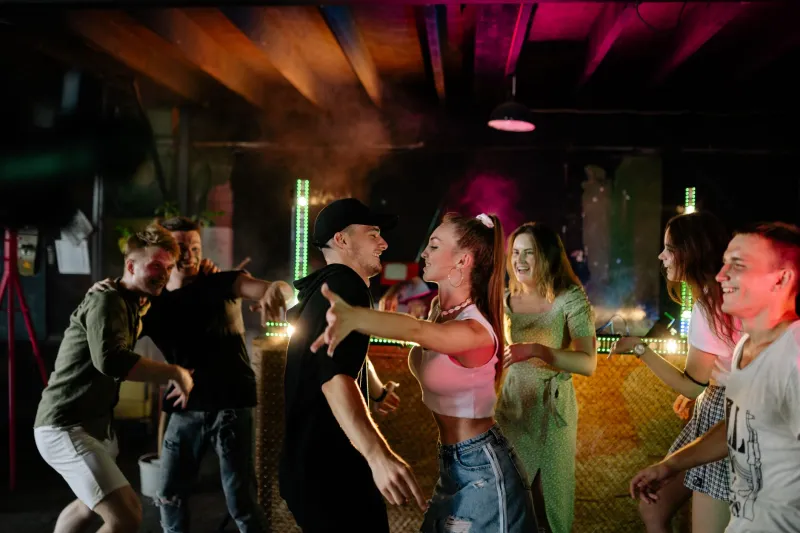
Let's get one thing straight before we go any further: this is not a story about people who don't drink sitting sadly in the corner while everyone else has fun. This is a story about a genuinely new kind of night out — one that's louder, sweatier, and arguably more euphoric than the standard bar crawl, and one that's finding a real foothold in Philadelphia right now.
Call it the sober-curious wave, the wellness-nightlife crossover, or just a generation finally deciding that a hangover isn't the price of admission for a good time. Whatever you call it, it's here, it's growing, and it's reshaping what going out in this city actually looks like.
The Shift Nobody Saw Coming
The data has been building for a while. Alcohol consumption among adults under 35 has been declining steadily for years, with Gen Z in particular drinking significantly less than their Millennial predecessors at the same age. But statistics don't tell the full story. What's actually happening on the ground in cities like Philly is more nuanced — and more interesting — than a simple "young people drink less" headline.
It's not just abstinence. It's a fundamental rethinking of what social spaces are for. People still want to dance. They still want to dress up, go out, feel the energy of a room full of strangers all moving together. They just increasingly don't need alcohol to get there — and they're building venues and events that reflect that.
Nadia Torres, a 27-year-old who's been sober for two years and lives in West Philly, describes the shift as liberating in a way she didn't fully anticipate. "I thought going sober meant my social life was basically over," she admits. "And for a little while, honestly, it kind of did. But then these spaces started popping up and I realized — oh, I don't have to choose between being sober and having a life."
What These Spaces Actually Look Like
The range of what's emerging in Philadelphia is genuinely diverse, which matters. This isn't a monolith. On one end, you have fully alcohol-free nightclubs and pop-up dance events, some of which run until 2 a.m. and feature production values — lighting, sound, live DJs — that rival any traditional club in the city. The energy in these rooms, by multiple accounts, is surprisingly intense. When you remove the social lubricant of alcohol, something else tends to fill the space: presence, connection, a kind of collective focus that can tip into genuine euphoria.
On the other end of the spectrum, you have more contemplative spaces — meditation-based social gatherings, breathwork events that function almost like a party, sound bath experiences that blur the line between wellness ritual and communal night out. These aren't your gym's yoga class. They're intentionally designed as social experiences, with post-session hangouts, community-building components, and a vibe that's more "we're all in this together" than "namaste and goodbye."
In between, there's a whole ecosystem of hybrid events: fitness raves where a DJ-soundtracked workout leads into a non-alcoholic social hour, pop-up mocktail bars at art openings, sober brunches that somehow feel more celebratory than their boozy counterparts.
The Business Case
Venue operators in Philly who've dipped into this space say the business model is more viable than skeptics might assume. The conventional wisdom in hospitality has always been that alcohol is where the margins live — that without a liquor license, you're leaving most of your revenue on the table. That math is getting complicated.
Celeste Park, who runs a wellness and social events company based in Center City, says her alcohol-free events consistently sell out faster than comparable alcohol-serving events she's attended as a guest. "People think sober spaces are niche," she says. "But I've had people show up who drink all the time. They're not coming because they're sober — they're coming because the event sounds good. The 'no alcohol' thing is almost secondary to the experience itself."
Park also notes the operational advantages: no liquor license fees, no liability around intoxicated guests, no last-call scramble. "It simplifies a lot," she says. "And honestly, when the experience is strong enough, people spend money on other things — premium non-alcoholic drinks, food, merchandise, tickets to future events."
The non-alcoholic beverage market has exploded in recent years, giving operators real options beyond sparkling water and soda. Sophisticated zero-proof cocktails, adaptogen-infused drinks, functional beverages designed to create genuine mood shifts — the toolkit has expanded dramatically, and Philly's more adventurous bar programs are starting to take notice.
Not Preaching, Just Partying
One thing that comes up consistently in conversations with people building this scene is a deliberate resistance to moralizing. The worst version of sober nightlife, several people told us, is the kind that positions itself as virtuous — where the implicit message is that drinking is bad and everyone here has made the superior choice.
"Nobody wants to go to a space that makes them feel judged," says Torres. "The best events I've been to don't mention alcohol at all. They're just focused on creating something great. The absence of drinking is kind of incidental to the whole thing."
This is, perhaps, the most important cultural shift embedded in all of this. The goal isn't sobriety as an ideology. It's just a different set of conditions for a good night — conditions that happen to work really well for a lot of people who've been quietly waiting for them.
Philly's Particular Flavor
What makes this trend resonate specifically in Philadelphia is the city's complicated relationship with its own nightlife identity. Philly has long been a drinking city — that's baked into its bar culture, its sports culture, its neighborhood identity. The emergence of sober and sober-curious spaces isn't a rejection of that. It's more like an expansion of the menu.
Philly is also a city with deep wellness roots — think about the running culture along the Schuylkill, the yoga studios packed into every neighborhood, the farmers markets that draw serious crowds. The leap from "health-conscious by day" to "health-conscious by night" isn't as big as it might seem. These communities were always going to find each other eventually.
The result is something that feels distinctly Philly: unpretentious, community-rooted, a little scrappy, and genuinely interested in doing something different for its own sake rather than to be trendy about it.
The Night Out, Reimagined
None of this means traditional nightlife is going anywhere. The bars of South Street, the clubs of Delaware Avenue, the corner spots that anchor every neighborhood — they're not under threat. But the definition of a great night out is quietly, meaningfully expanding. And for a growing slice of Philadelphia, the best version of going out doesn't involve a single drink.
That's not a compromise. That's just a different kind of alive.