Off the Grid and On Fire: The Philly Neighborhoods Quietly Becoming Cultural Powerhouses
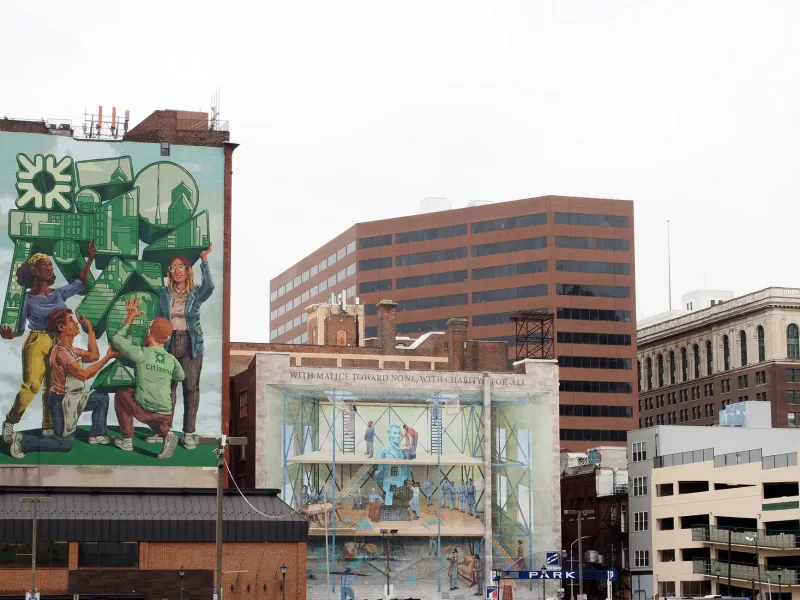
There's a version of Philadelphia that exists for visitors — the Liberty Bell, Reading Terminal Market, a cheesesteak photo op on Passyunk. And then there's the city that actually lives and breathes, the one built block by block by people who never left and people who came specifically to build something real. That version? It's not on any tourist map. And the people making it happen prefer it that way.
Philly has always had a streak of stubborn authenticity running through it. But something different is happening right now. In neighborhoods that were written off, overlooked, or straight-up ignored by the city's cultural establishment, independent venues, creative collectives, and tight-knit communities are doing the hard, unglamorous work of building something that lasts.
We spent time in four of these neighborhoods — talking to the people planting roots, opening doors, and refusing to wait for the spotlight to find them.
Kensington: From Crisis to Canvas
Kensington has been the subject of national headlines for years, and rarely flattering ones. But zoom past the narrative and spend actual time here, and you find something the coverage consistently misses: a community of artists, organizers, and longtime residents who are fiercely, deliberately reclaiming their neighborhood's identity.
Maria Delgado has run a community print studio out of a converted row house on Lehigh Avenue for three years. She didn't come here to gentrify. She grew up six blocks away. "People want to tell a story about this place like it's a blank slate," she says, rolling ink onto a carved block print. "It's not. There's history here. There's culture. We're not starting from scratch — we're building on what's already here."
The studio hosts open print nights twice a week, pulling in neighbors, students, and working artists. Around the corner, a basement venue that books local punk and cumbia acts has become a genuine gathering point. Nobody's trying to make Kensington the next Fishtown. That's the whole point.
Germantown: The Archive That's Still Alive
Germantown is one of those Philadelphia neighborhoods that historians love and developers have historically undervalued. It's a place with an almost absurd density of pre-Revolutionary architecture sitting alongside Caribbean restaurants, Black-owned bookstores, and jazz rehearsal spaces tucked into Victorian row homes.
Devin Okafor opened a natural wine bar and record shop hybrid on Germantown Avenue two years ago, and he'll tell you the neighborhood chose him as much as he chose it. "I looked at spots in Fishtown, in Northern Liberties," he says, pulling a sleeve from a crate of soul 45s. "The rents were wild, and honestly, the scenes felt done. Germantown felt alive in a way that was harder to explain but easier to feel."
His shop — which doesn't have a website and doesn't need one — draws a crowd that reflects the neighborhood's genuine diversity. On any given Friday night, you'll find a 70-year-old who's lived on the block for decades sharing a table with a 28-year-old who just moved from West Philly. "That's not something you manufacture," Okafor says. "That's something you protect."
West Philly: The Creative Infrastructure You Never Heard About
West Philadelphia has long been home to one of the city's most dynamic creative ecosystems — and one of its least-covered. The stretch of Baltimore Avenue running through Squirrel Hill and Cedar Park has quietly become a corridor of independent restaurants, community galleries, and performance spaces that operate almost entirely outside the mainstream cultural press.
The Collective at 52nd, a rotating group of visual artists and musicians who share a warehouse space near 52nd and Locust, has been producing work and hosting community events for five years. Co-founder Jasmine Park laughs when asked if they've ever tried to get press coverage. "We had a journalist reach out once," she says. "They wanted to write about how West Philly was 'up and coming.' We passed. It's been up and come. We've been here."
That self-sufficiency is intentional. The Collective runs on membership dues and occasional sliding-scale events, deliberately avoiding the grant cycles and institutional relationships that can quietly reshape a community's priorities. "The moment you start performing for funders," Park says, "you stop performing for your people."
Olney: The Most Diverse Block Party You've Never Been To
If you want to understand what Philadelphia actually looks like demographically, spend a weekend in Olney. The neighborhood — bounded by Broad Street to the west and Roosevelt Boulevard to the north — is one of the most genuinely multicultural ZIP codes in the entire country, home to large Latinx, Southeast Asian, Caribbean, and African immigrant communities living in close proximity.
That density of culture produces something remarkable: a food and music scene that doesn't exist anywhere else in the city. Salvadoran pupuserias sit next to Cambodian grocery stores. A Vietnamese karaoke bar shares a strip mall with a Dominican hair salon that doubles as a community bulletin board.
Long-time resident and community organizer Rosa Tran has been pushing the city to pay more attention to Olney's cultural assets for years. "Everyone talks about diversity like it's an aspiration," she says. "We're already living it. We don't need a think piece. We need the city to show up for us the way we show up for each other."
An annual block festival that Tran helped organize drew over 2,000 people last summer — almost entirely from within the neighborhood itself. No sponsorship banners. No VIP section. Just a neighborhood feeding itself and dancing in the street.
What These Places Have in Common
Kensington, Germantown, West Philly, Olney — they're different in almost every measurable way. Different histories, demographics, architectural textures, and creative languages. But the people building culture in each of these places share something: a conscious resistance to the forces that have hollowed out so many American urban neighborhoods.
They're not anti-growth. They're pro-community. There's a difference, and it matters. The most exciting cultural production happening in Philadelphia right now isn't happening in a new condo development with ground-floor retail. It's happening in basements, warehouses, converted row homes, and strip mall storefronts — in places where the rent is still survivable and the community still has a say.
Philly has always been a city that rewards the people willing to look past the obvious. Right now, the obvious is Center City. The real city is everywhere else.