Clocking In at Midnight: Meet the Philly Entrepreneurs Who Built Their Hustle After Dark

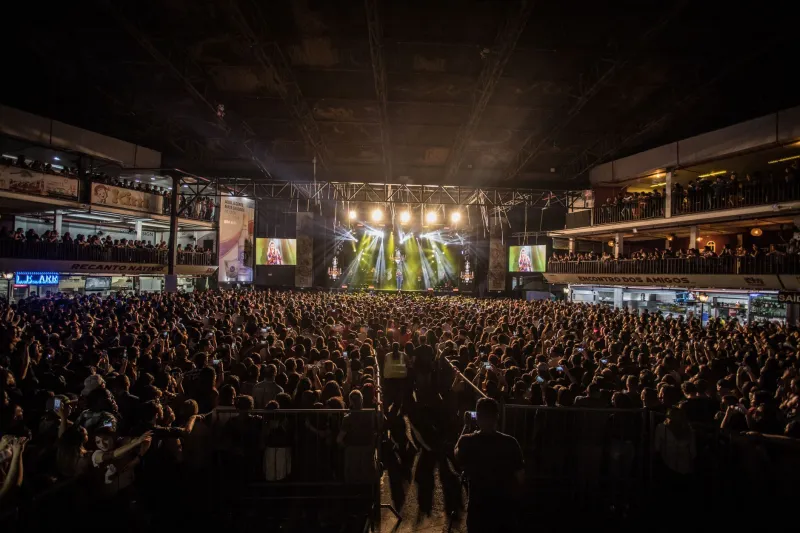
There's a version of Philadelphia that most people never see. It kicks in somewhere around 11 PM, after the dinner crowd thins out and the SEPTA buses start running on their ghost schedule. The streets don't empty — they transform. And for a specific breed of entrepreneur, that transformation isn't something to sleep through. It's the whole point.
Call it the 3 AM economy. It's not new, exactly, but it's expanding in ways that would've seemed unlikely even five years ago. Across neighborhoods from Fishtown to West Philly to Kensington, business owners are deliberately building operations designed to thrive when the rest of the city is horizontal. They're not just surviving the night shift — they're engineering around it.
The Laundromat That Slaps
Take Marcus Ellison, who opened Spin Cycle on Frankford Avenue in 2021 with a concept that sounds like a joke until you see the line out the door at 1 AM on a Saturday. Yes, it's a laundromat. Yes, there's a DJ booth built into the back wall. Yes, the lighting changes color after 10 PM.
"People thought I was wild," Ellison says, folding a stack of flyers for an upcoming late-night set. "But I was looking at the data. Laundromats near bar corridors do a huge chunk of their business between 11 PM and 4 AM. People come in after they've been out, or they're night-shift workers, or they just can't sleep. I thought — what if that experience didn't have to be depressing?"
Spin Cycle now hosts weekly DJ residencies, sells drinks through a partnership with a neighboring BYOB, and has a waitlist for vendor pop-up slots on weekend nights. The laundry is almost secondary. Almost.
Ellison's instinct — that underserved hours equal underserved customers — is the same logic driving a surprising range of Philly businesses that have quietly planted their flags in the dark.
Night as a Market, Not a Liability
Conventional business wisdom treats nighttime operations as a cost center. Higher insurance. Security concerns. Staffing headaches. The city's permitting infrastructure is built around daytime commerce, and entrepreneurs who want to operate past 2 AM often find themselves navigating a bureaucratic maze that wasn't designed with them in mind.
But a growing number of Philly founders are flipping that calculus. Where traditional business owners see friction, they see a moat.
"The barrier to entry is real," admits Priya Okonkwo, who runs a late-night content production studio out of a converted warehouse space in Point Breeze. "But that's also why there's less competition. If it were easy, everyone would do it."
Okonkwo's studio — she calls it Dark Room, which doubles as a photography reference and a statement of intent — operates primarily between 8 PM and 6 AM, offering production services to musicians, brands, and creators who either prefer working at night or need turnaround times that daytime studios can't accommodate. Her client list has grown almost entirely through word of mouth, and she's booked three months out.
"There's a whole creative class in this city that runs on a nocturnal schedule," she says. "Musicians finishing sessions, content creators who shoot at night for the aesthetic, small brands that can't afford to take time away from their day jobs. I built something for them."
The Tech Angle Nobody's Talking About
It's not just brick-and-mortar. Philadelphia's tech scene — scrappier and more underground than its counterparts in New York or D.C. — has its own nocturnal wing. A handful of small startups have deliberately structured their operations around off-peak hours, using the quiet to their advantage.
Devon Park (not his real name — he's cagey about competitors) runs a small software consultancy from a co-working space in Center City that he accesses with a 24-hour key card. His team of four is spread across time zones, but the Philadelphia-based work happens almost exclusively between 10 PM and 3 AM.
"My best thinking happens after midnight," he says, not apologetically. "And honestly, the city is just better then. No traffic noise. No interruptions. I can get four hours of deep work done that would take eight hours during the day."
His clients — mostly mid-size companies that need overflow development capacity — don't care when the work gets done. They care that it gets done. Park has structured his entire business model around that indifference, and it's paying off.
What the Night Reveals
There's something almost philosophical about what these entrepreneurs are doing, even if most of them would roll their eyes at the framing. They're not just finding a niche — they're interrogating the assumption that productive, legitimate economic life belongs to daylight hours.
Philadelphia has always had a complicated relationship with its own potential. It's a city that gets underestimated constantly, by outsiders and sometimes by itself. The people building businesses in the 3 AM economy feel like a natural extension of that chip-on-the-shoulder energy — people who looked at what everyone else was ignoring and decided to build something there.
"Daytime Philly is great," Marcus Ellison says, watching a customer load a dryer while a DJ tests levels in the background. "But nighttime Philly is honest. People are off the clock. They're themselves. If you can build something that serves them in that moment, they'll be loyal forever."
The Challenges Are Real — And So Is the Momentum
None of this is without friction. Late-night business owners in Philadelphia consistently flag the same pain points: city noise ordinances that are applied inconsistently, a lack of late-night public transit options that limits their customer base, and a banking and insurance infrastructure that still treats after-hours operations as inherently higher risk.
There's also the human cost. Running a business that peaks at 2 AM means your personal life operates on a different clock than almost everyone around you. Relationships strain. Family events get missed. The isolation is real.
But the momentum is real too. As remote work has decoupled productivity from the 9-to-5, as younger consumers increasingly organize their social and economic lives outside traditional hours, the 3 AM economy isn't a quirk anymore. It's a signal.
Philly, with its density, its creative energy, and its long tradition of doing things its own way, might be exactly the right city to figure out what comes next — one late night at a time.