Clocking Out at Midnight: The New Philly Hustlers Turning the Night Into a Business
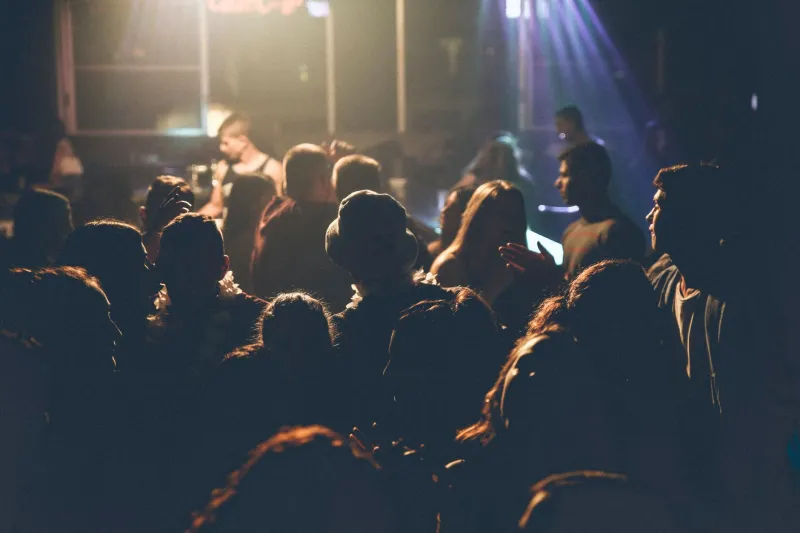
There's a version of Philly's night scene that never shows up on Yelp. No velvet ropes, no cover charge posted on Instagram, no liquor license framed behind the bar. Just a text blast going out around 9 p.m., a warehouse address in Kensington or a rowhome basement in West Philly, and a few hundred people who already know the deal. By 2 a.m., the promoter pockets a few thousand dollars in cash, the jerk chicken vendor outside has sold out twice, and the experience designer who curated the whole thing is already planning the next one.
This is Philly's parallel nightlife economy — and it's growing faster than anyone in City Hall seems to realize.
The Promoter as CEO
Darius Whitfield has been throwing parties in Philadelphia for six years. He doesn't own a venue. He doesn't have investors. What he has is a contact list, an eye for talent, and an almost surgical understanding of what his audience — mostly Black professionals and creatives in their mid-20s to mid-30s — actually wants on a Saturday night.
"People are tired of the same environment," Whitfield says, sitting in a South Philly café on a Tuesday afternoon. "Same DJ, same drinks, same vibe. I'm giving them something they can't get anywhere else. That's the product."
His model is lean by design. He rents out non-traditional spaces — art studios, rooftop terraces, even a converted auto shop in Fishtown — negotiating short-term agreements with property owners who are often happy to monetize idle square footage. Ticket sales happen through private links, sometimes capped at 200 people to keep the energy intimate. He handles his own production, pays artists directly, and keeps overhead tight.
Last year, Whitfield says he cleared over $80,000 from events alone — not counting brand partnerships and private bookings. "I run this like a business because it is one," he says. "I just don't have a storefront."
The Pop-Up Food Economy That Feeds Off the Night
While promoters like Whitfield are building the room, another layer of entrepreneurs is capitalizing on the hunger — literally.
Tamara "Mara" Jones started her late-night food operation almost by accident. She'd been catering small events for a couple years when a friend asked her to set up outside an underground party in North Philly. She sold out of her smash burgers and loaded fries within 45 minutes. That was three years ago. Now she runs what she calls a "roving kitchen" — a tricked-out cargo trailer that follows the underground circuit on weekends.
"These events don't have kitchens. The people are hungry, they've been drinking or dancing, and there's nothing open nearby at 1 a.m. that isn't a gas station," she explains. "I fill that gap."
Mara charges event organizers a flat placement fee and keeps all food revenue. On a strong weekend — two or three stops — she can pull $2,500 to $3,500. She's also started doing private late-night buyouts for corporate events and birthday parties, which she says are "easy money" compared to the hustle of street vending.
The challenge, she's quick to note, is the city's patchwork of vending regulations. "Philadelphia's rules for mobile food aren't built for what we're doing. I've had to get creative with permits, figure out what actually applies to my situation. It's a lot of homework."
Experience Design as a Profession
If promoters are the architects and vendors are the infrastructure, experience designers are the ones giving the whole thing a soul.
Jordan Reese operates under the name Soft Architecture and describes their work as "building emotional environments." That might mean transforming a raw industrial space in Brewerytown with projection mapping and scent diffusers, or designing an immersive dinner series in a Germantown Victorian where every room tells a different story. Clients hire Reese months in advance, and rates for a full build-out start at $5,000.
"Younger audiences aren't just going out to drink anymore," Reese says. "They want to feel something. They want content. They want a memory. I build the conditions for that."
The demand has been steady enough that Reese now employs two part-time assistants and a network of freelance artists, lighting techs, and sound designers. It's a full creative economy spinning out of a single freelance operation that started with a projection setup borrowed from a friend.
The Regulatory Gray Zone
None of this is without friction. Philadelphia's regulatory framework for nightlife was built around licensed establishments with fixed addresses — not fluid, event-driven micro-businesses operating in borrowed spaces.
Permitting for one-off events, temporary use of non-venue spaces, and mobile vending can involve multiple city agencies, inconsistent enforcement, and costs that eat into already-thin margins. Several of the entrepreneurs interviewed for this piece described navigating the system as a full-time job in itself.
"The city wants the tax revenue but doesn't make it easy to operate legally," says one promoter who asked to remain anonymous. "So a lot of people just don't bother. They operate in the gray. And honestly, that's partly the city's fault for not creating a clearer path."
Advocates have been pushing for a streamlined special events permitting process for years, pointing to cities like New York and Chicago that have created dedicated nightlife offices to bridge exactly this kind of gap. Philadelphia's Office of Special Events exists, but operators in this space say it's not designed with their model in mind.
Who's Actually Winning the Night
What's striking about this emerging economy is how deliberately it's been built around community rather than consumption. The most successful operators aren't just chasing revenue — they're cultivating loyalty, building audiences, and creating cultural infrastructure that the city's licensed venues often fail to provide.
The crowds showing up to these events skew younger, more diverse, and more deliberately intentional about how they spend their time and money. They're not looking for a club. They're looking for a room full of people who get it — whatever "it" happens to be that night.
Darius Whitfield puts it plainly: "I'm not competing with the bars on South Street. I'm building something those bars can't touch. The people who come to my events aren't looking for what those places are selling."
The math is starting to speak for itself. In a city where brick-and-mortar venues are perpetually squeezed by rising rents, insurance costs, and staffing shortages, the lean, mobile, community-driven model these entrepreneurs have built is starting to look less like an underground hustle and more like the future of nightlife business in Philadelphia.
The night, it turns out, is wide open — and a whole new class of Philly entrepreneurs is already working it.